Build Your Ultimate Watch Collection for ₹1K to ₹50K
From Budget to Luxury – What You Need to Own
5 mins
Budget
The Difference Between Quartz and Mecha-Quartz Movement
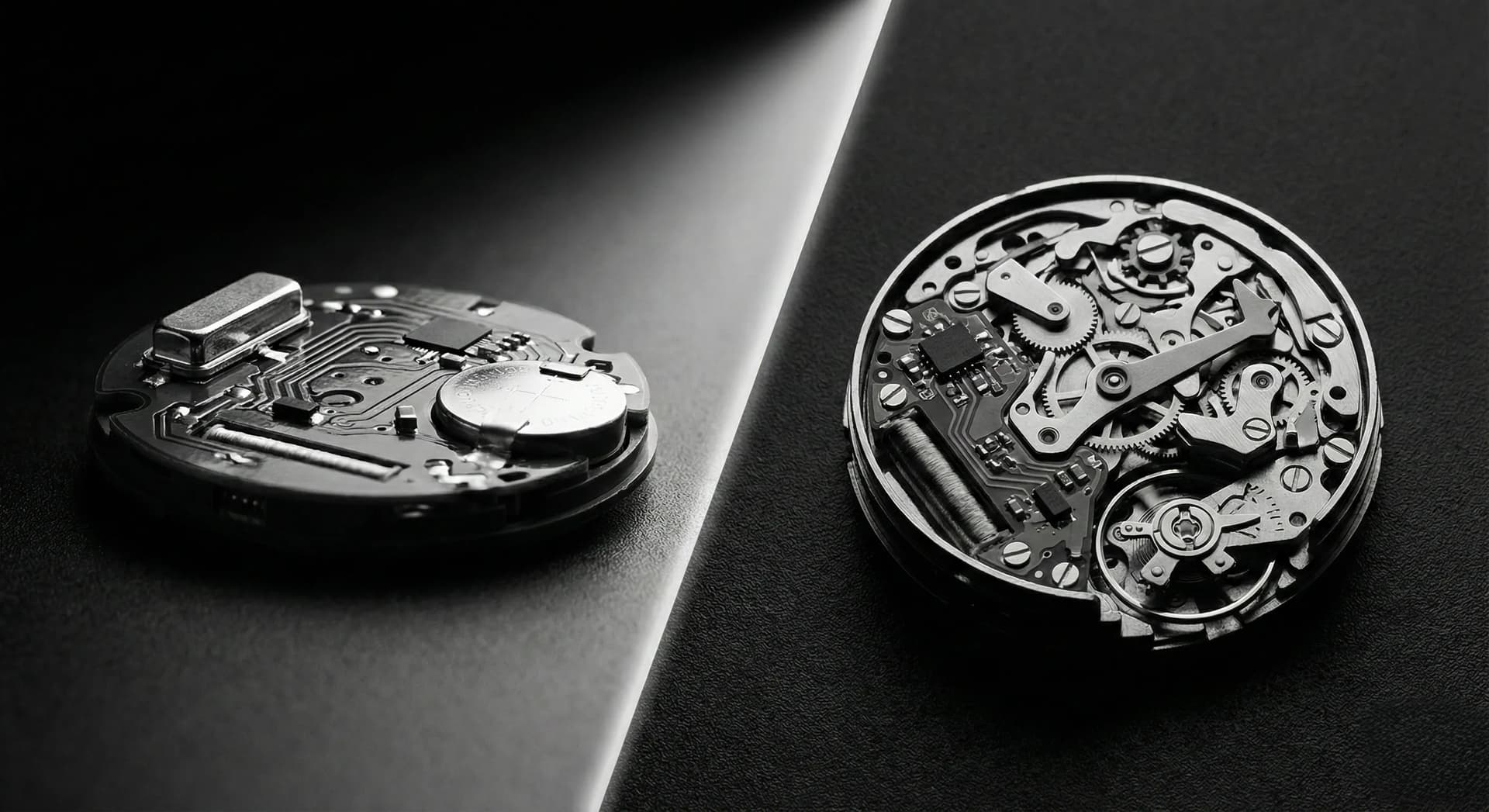
Most people lump all battery-powered watches together, but the difference between quartz and mecha-quartz is more than a technical detail. It affects the feel of the watch, the price you pay, and even the kind of brands you’ll find using each movement. Understanding this divide makes you a smarter buyer instead of someone just following the usual marketing noise.
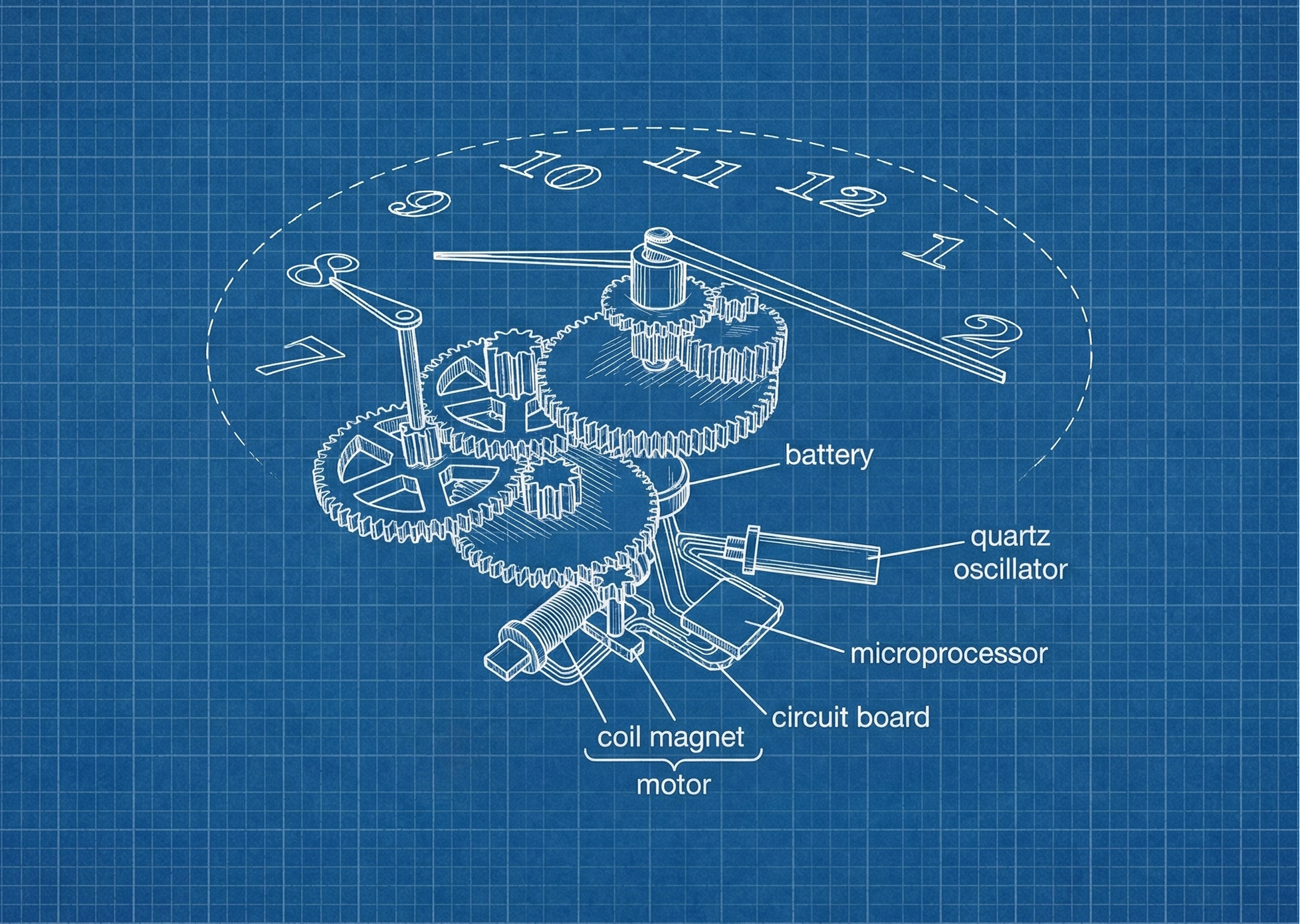
Quartz movement became popular because it solved the biggest headache of mechanical watches: inconsistent timekeeping. A simple battery powers a quartz crystal that vibrates at an extremely stable frequency, giving you precise time with zero effort. There’s no winding, no power reserve anxiety and barely any drift.
This is why brands like Casio, Timex, Citizen, and Seiko built global trust around quartz. Even fashion-first brands such as Fossil, Tommy Hilfiger, and Armani Exchange prefer quartz. It lets them focus on design while still offering something that works reliably for years without servicing.

Quartz is inexpensive to produce, extremely durable, and easy to replace or repair. Manufacturers use it because it keeps production costs predictable and allows them to deliver stylish watches at accessible prices. For buyers, it means you get a dependable watch without the commitment of mechanical maintenance.
Quartz watches typically range from 1k to 15k INR, depending mostly on build quality and branding. Even luxury quartz pieces rarely climb high unless the brand name is carrying the weight. The movement itself is affordable and that’s why quartz dominates the under-10k and mid-tier market.
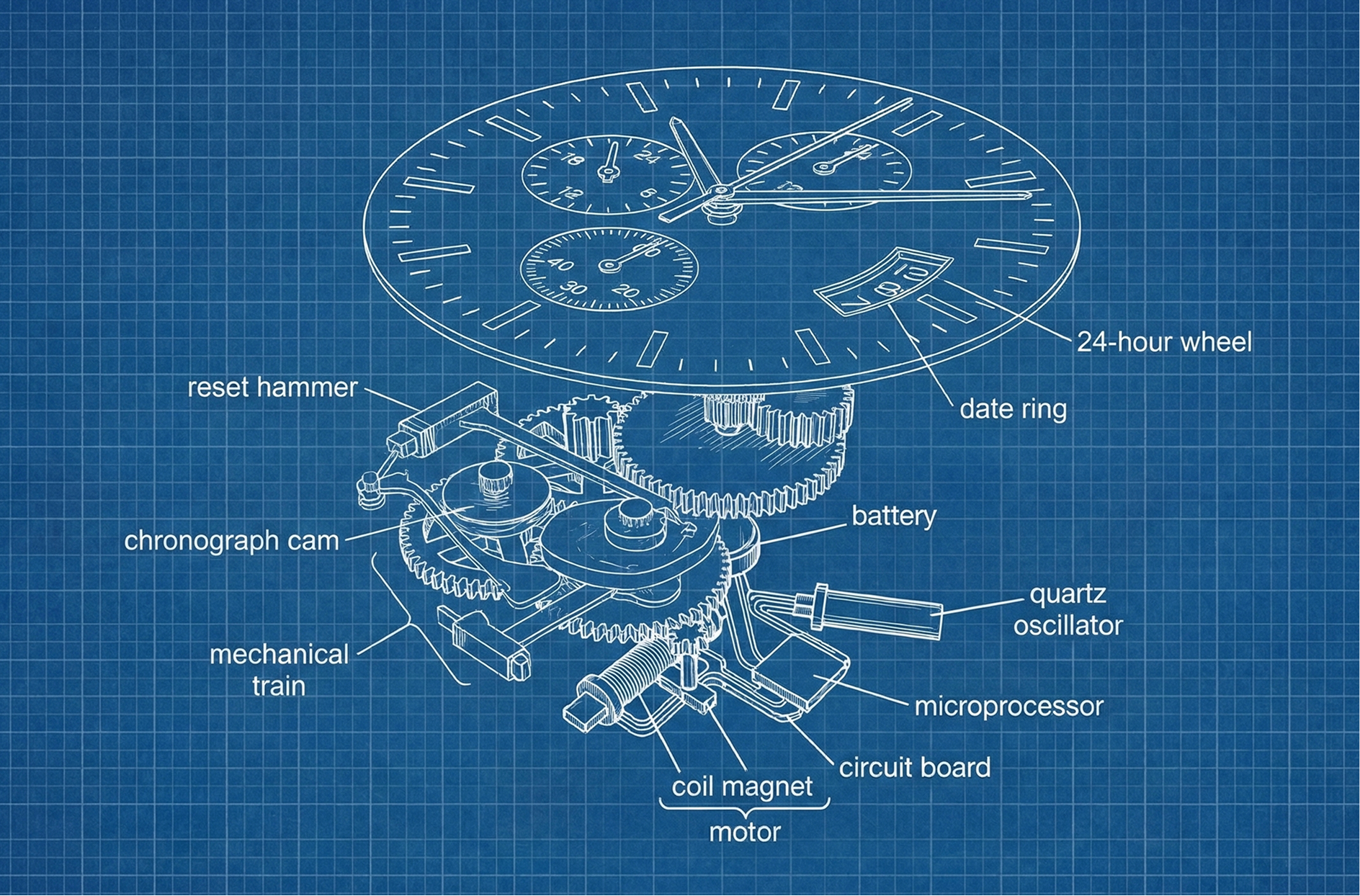
Mecha-quartz is the answer for people who want more personality than quartz can offer. It uses a quartz base for timekeeping but integrates a mechanical chronograph module. When you start or reset the chronograph, the hand behaves like a mechanical one, snapping back with that sharp, satisfying motion that collectors love.
The entire point of mecha-quartz is experience. You get the tactile feel of a mechanical chronograph without dealing with the servicing costs and the price tags that usually come with it.
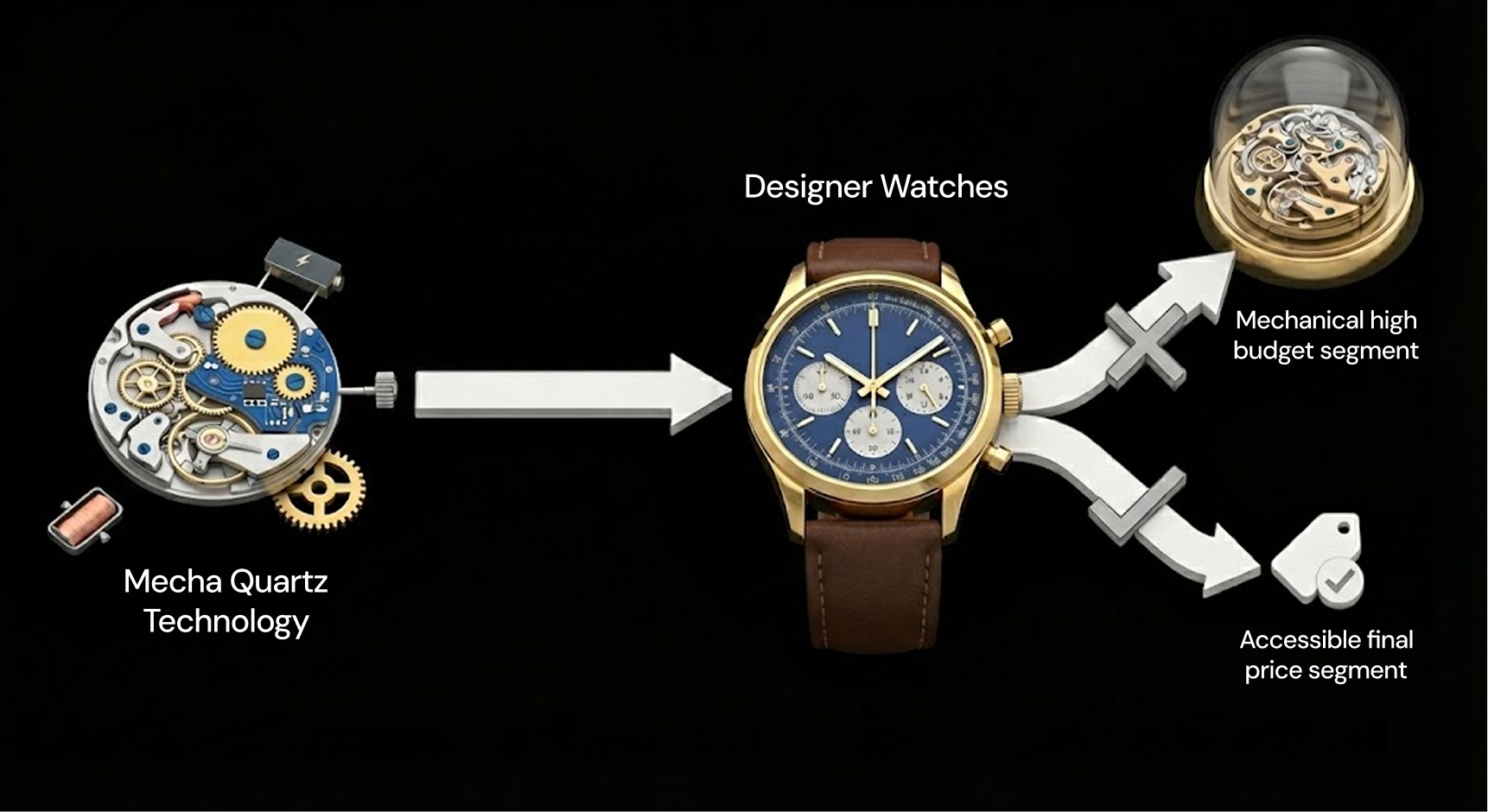
Seiko pioneered this hybrid concept with its VK series movements, and it quickly became a favorite among enthusiast-driven brands. Companies like Dan Henry, Brew Watch Co, Yema, Straton, and several microbrands rely on mecha-quartz because it gives them the freedom to design interesting, vintage-inspired chronographs without pushing the final price into mechanical-watch territory.
These brands use mecha-quartz not because they want to cut corners but because it allows them to deliver mechanical character in a package that normal buyers can afford.
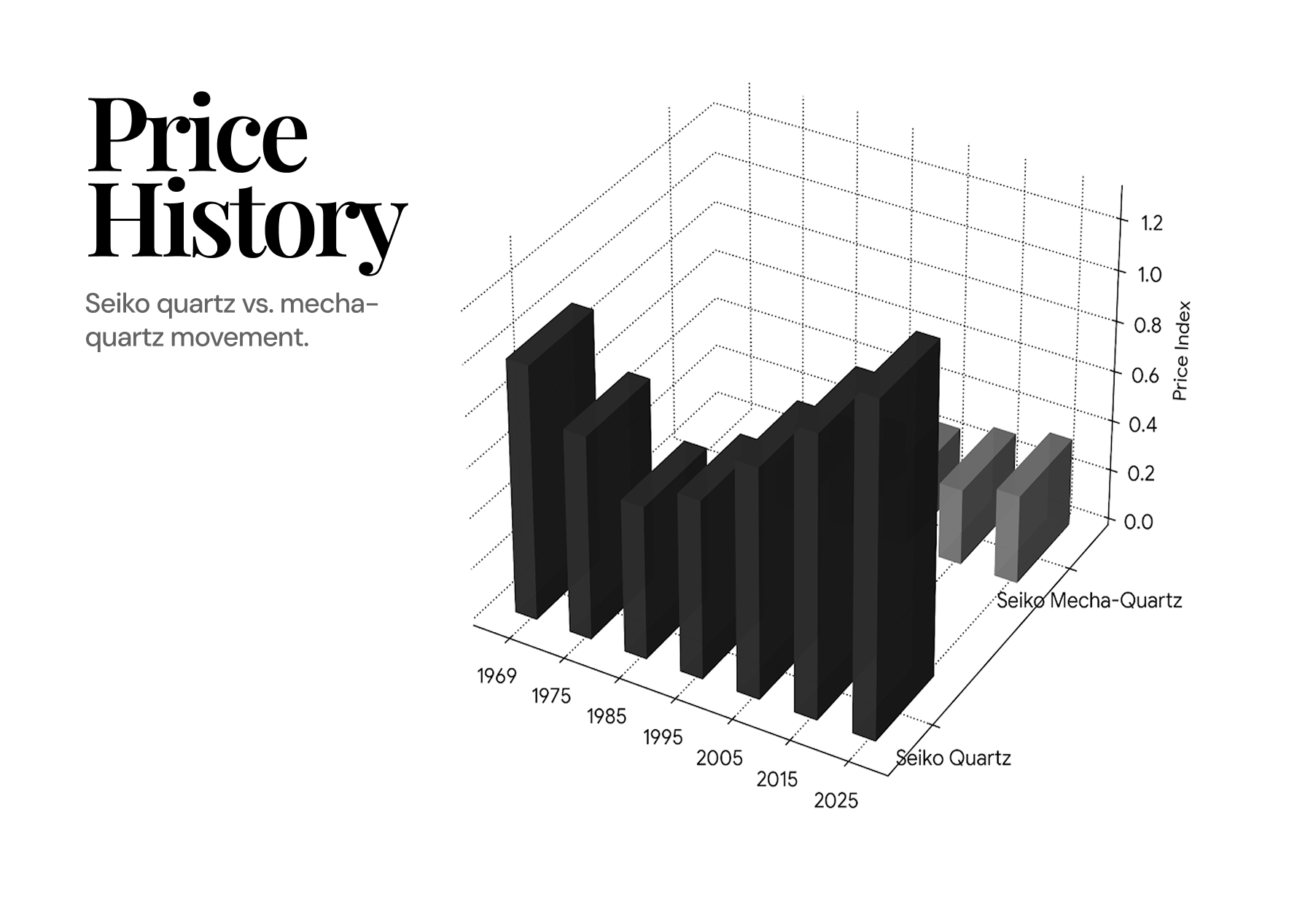
Mecha-quartz watches usually fall between 12k and 40k INR. You’re paying for the added mechanical components, the complexity of the chronograph module, and a more enthusiast-friendly design and assembly process. Compared to full mechanical chronographs that often start near 80k INR and shoot into the lakhs, mecha-quartz is a bargain with real personality.
Quartz feels light, quiet, and straightforward. It’s the kind of watch you forget about because it just works.
Mecha-quartz brings a bit more heft and drama. The chronograph gives the watch a mechanical soul even though the timekeeping is quartz-driven. You feel more involved with the watch, especially when you interact with the pushers.
Go for quartz if you want convenience, accuracy, and a watch you never have to think about. It’s perfect for daily wear, travel, and situations where reliability matters more than character.
Choose mecha-quartz if you want a watch with personality and mechanical charm without paying mechanical-watch prices. It’s a great middle ground for anyone who loves chronographs but isn’t ready to commit to the servicing and cost that come with a full mechanical build.
/
Love these stories? Subscribe to Watchgyan's Newsletter for more such curated stories from the watch industry.